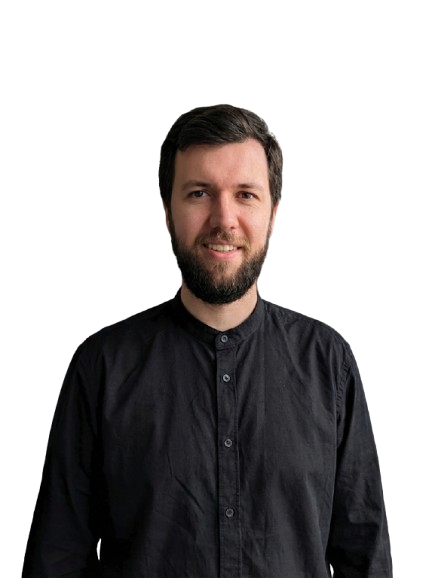
Guilherme Viegas
Human-in-the-loop
I am a strategic data architect who designs and implements robust, scalable data ecosystems, translating complex information into actionable insights. My expertise spans the entire data lifecycle, from developing cloud-native infrastructure and automated pipelines to deploying advanced machine learning and geospatial models. With a foundational understanding in economics, I consistently bridge technical innovation with business objectives, empowering data-driven decisions that foster growth and efficiency.
Technical Toolkit
Professional Journey
AI Engineer - Wayvant, Spain
Infrastructure as Code using GCP and Terraform;
IT Consultancy for Data Warehousing and Report Development;
AI Engineering with feedback loop;
Data Pipeline Development and Maintenance;
Tech: GCP, Terraform, BQ, SQL, SQLX, DataForm, Gemini, Python, JS;
Cloud Data Engineer - CloudPilots, Germany
Cloud Infrastructure using GCP and Terraform;
IT Consultancy for Databases and Report Development;
FinOps, Cloud Migration, ETL, and Reporting;
Data Pipeline Development and Maintenance;
Tech: GCP, Terraform, BQ, SQL, SQLX, DataForm, BigData, JS, Python;
Data Consultant, Inetum/Noesis, Portugal
Cloud Infrastructure Development and Maintaining;
Database Administration;
Network Analysis and Spatial Data Visualization;
Training of Interns;
Tech: Azure, GCP, Terraform, Bash, Python, Postgres, PostGIS;
Census Agent of Admnistration and Informatics, IBGE, Brazil
Support Census Research in Assigned Areas/Regions;
Reviewing Field Sites and Research Reports;
Training of Census Agents to Conduct Interviews;
Data Collection and Supervision;
Tech: Excel and Proprietary Software;
Applied Data Scientist, 4Intelligence, Brazil
Data Cleaning and Transformation;
Statistical and Machine Learning Modeling;
Time Series Forecasting and Anomaly Detection;
Development of Data Pipelines;
Tech: Python, R, Bash, Postgres, SQL, Azure, Excel;
Junior Data Scientist, Aquarela, Brazil
Data Cleaning and Transformations;
Development of Analytical Dashboards;
Statistical Modeling and Machine Learning;
Deployment of Dashboards in Production;
Tech: R, Python, Docker, JS, CSS, GCP, AWS;
Education
Master of Science in GeoSpatial Technologies - University of Münster
Bachelor of Science in Economics - Federal University of Santa Catarina
Certifications
- Google Professional Cloud Architect Certification (GCP)
- Google Professional Cloud DevOps Engineer Certification (GCP)
- Google Generative AI Leader Certification (GCP)
- Google Professional Machine Learning Engineer Certification (GCP)
- Google Associate Cloud Engineer Certification (GCP)
- Google Associate Data Practioner Certification (GCP)
- Google Cloud Digital Leader Certification (GCP)
- Azure Associate Data Scientist Certification (Azure)
- Microsoft Certified: Designing and Implementing a Data Science Solution on Azure (DP-100)
- Microsoft Certified: Azure Data Fundamentals (DP-900)
- Microsoft Certified: Azure Fundamentals (AZ-900)
- Microsoft Certified: Azure AI Fundamentals (AI-900)
- Microsoft Certified: Security, Compliance, and Identity Fundamentals (SC-900)
- Microsoft Certified: Power Platform Fundamentals (PL-900)
Awards
- Merit-based fellowship for outstanding performance in the Masters of Science program in GeoSpatial Technologies
Languages
Methodological Approach
I believe modern data architectures must place the 'Human-in-the-Loop' at the very center of technical innovation, grounding abstract algorithms in tangible human context. My methodological approach begins with collaborative discovery, where I partner closely with domain experts to translate complex business objectives into testable hypotheses, ensuring that our models capture real-world causal dynamics rather than mere statistical correlations. This foundation transitions into a defensive engineering strategy, where I architect automated, transparent pipelines that prioritize data integrity and error handling over opaque complexity. To guarantee that every insight stands up to rigorous scrutiny, I enforce a culture of radical reproducibility—leveraging containerized environments, comprehensive documentation, and version-controlled infrastructure—to ensure that every result is traceable, auditable, and scientifically valid. The lifecycle concludes not with deployment, but with active stewardship, utilizing automated monitoring and continuous feedback loops to refine the system as market conditions evolve, thereby securing long-term reliability and sustainable business value.